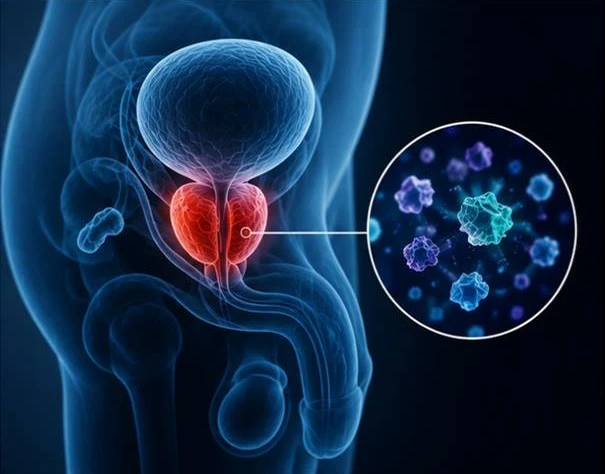
If you are living with prostate cancer, you are already doing a lot about it (hopefully)…. Changing your diet. Staying active. Tracking your PSA. But what if something completely outside your control, something invisible, something you have touched, eaten from, and drunk out of thousands of times, was quietly working against everything you are trying to build?
That is exactly the question scientists are now asking, and the answer is making a lot of researchers very uncomfortable. Now imagine hearing this:
Microplastic particles, the same ones found in your water bottle, your takeout container, and the air inside your home, have been detected inside prostate tissue. And researchers are now investigating whether lifelong exposure to these particles is creating the kind of biological environment where prostate cancer is more likely to grow and progress.
Let’s break down what they found and what it means for you.
Can something you cannot even see affect your prostate cancer?
As a health coach who specializes in supporting men with prostate cancer through evidence-based lifestyle changes, I can confidently say this is a very important and overlooked conversation in men’s health right now. And the science behind it was surprising even to me.
You have probably never thought twice about drinking from a plastic bottle or heating food in a plastic container. Most men have not. But what researchers are finding inside the human body is very hard to ignore.
Let’s explore what the science says.
Why are microplastics a problem for the prostate?
Microplastics are tiny fragments of plastic so small that they can enter the human body without you ever noticing. Scientists have already found them in human blood, lungs, placentas, breast milk, and even the brain.
And now inside the prostate.
Researchers have detected measurable plastic particles in prostate tissue. They have also identified chemicals linked to plastics, including BPA and phthalates, that directly interact with hormone pathways already known to play a major role in prostate cancer growth.
And suddenly, this stopped sounding like a distant environmental issue.
What did the research actually find?
Researchers studying the effects of microplastics on prostate cancer cells found that even low-dose exposure to polystyrene microplastics promoted prostate cancer cell growth in the laboratory. Microplastics interfered with a key cellular process called ferroptosis, essentially helping cancer cells survive when they should have been dying.
Low doses… The kind of exposure that happens every single day. And cancer cells were surviving longer because of it.
A separate review of the current evidence found that microplastic-associated pollutants interfere with multiple pathways involved in prostate cancer development, including hormonal signaling, oxidative stress, and cellular inflammation. These are real studies by scientists that raise serious concerns about something men use or are exposed to every single day.
And this is where nutrition becomes incredibly important.
The biological agents that help protect your prostate
The good news is that your body is not completely defenseless against this.
Researchers are now studying certain foods and plant nutrients that counter some of the exact inflammatory and hormonal pathways microplastics appear to trigger in prostate cancer cells.
Below are some of the most interesting ones.
Green tea (EGCG)
Green tea contains something powerful called EGCG that acts almost like a shield against cell damage.
Researchers found it:
Calms inflammation linked to prostate cancer
Protects cells from damage caused by oxidative stress
Supports the body’s natural defense systems against toxins
This is one reason green tea keeps appearing in prostate cancer research again and again.
Turmeric (Curcumin)
Turmeric contains curcumin, which is known for its strong anti-inflammatory effects.
Research suggests it:
Switches off the inflammatory signals that cancer cells use to grow
Reduces stress and damage inside cells
Slows down abnormal prostate cancer cell activity
Some studies even suggest turmeric may work better when combined with green tea.
Rosemary (Carnosic Acid)
Rosemary is not just a cooking herb. Rosemary contains carnosic acid, which researchers are studying because it blocks some of the hormone signals that prostate cancer cells rely on.
Studies suggest that rosemary:
Makes it harder for prostate cancer cells to use testosterone-like signals
Reduces inflammation inside the prostate tissue
Protects cells from toxic stress
Ashwagandha (Withaferin A)
Ashwagandha contains a compound called withaferin A that researchers are studying for its effects on cancer cells.
Research suggests it:
Increases stress specifically inside damaged cancer cells
Triggers cancer cell breakdown
Reduces inflammatory activity linked to cancer progression
African Plum Tree (Prunus Africana)
This herbal extract comes from the African plum tree and has been studied for prostate health for years.
Researchers found it:
Calms prostate inflammation
Reduces growth signals that encourage prostate cancer cells
Interferes with hormone activity linked to prostate cancer progression
None of these is a miracle cure. And none replace treatment. But this research highlights something important:
Your environment matters. Inflammation matters. Hormonal signaling matters. Oxidative stress matters.
And certain foods and botanical compounds help counter some of the exact mechanisms microplastics appear to activate.
What can you do right now?
Researchers consistently point toward these practical changes:
Avoid heating food in plastic containers
Avoid canned food (cans are lined with plastic)
Reduce bottled water intake
Reduce or eliminate soft drinks (both plastic bottles and cans)
Use glass or stainless steel for food and drink storage
Limit heavily processed packaged foods
Filter your drinking water if possible
Reduce eating out (for multiple reasons)
None of these guarantees protection. But they reduce your daily toxic burden, and THAT matters more than most people realize.
What this means if you are living with prostate cancer
This research does not mean your situation is hopeless. It means the opposite. There are daily habits and foods, completely within your control, that can reduce the total toxic burden your body deals with every single day. You are actively building an internal environment that is as hostile to cancer as possible, and nourishes your healthy cells.
These are exactly the kinds of strategies the men I work with have access to. For free evidence-based strategies, subscribe to my newsletter. To get structure, support, and community, join my Prostate Cancer Health Coaching Group. Or if you want a plan built specifically around your situation, my 1-to-1 coaching is the place to start. You do not have to handle this alone.
Other articles you may find interesting
What happened in the brain after three months of tomato paste?
I regularly recommend tomato paste to men with prostate cancer. A new human study gives us something else to talk about.
How prostate cancer rewires itself when testosterone is cut off
A hidden metabolic switch may change how castrate-resistant prostate cancer survives hormone therapy through diet.
What Happens to Prostate Cancer When Tomato Is Added to a Western Diet?
The same food was tested under two dietary conditions. What happened challenges the way we think about “anticancer” foods.
The pill that’s cutting prostate cancer deaths by 41%
New research suggests a widely used medication may reduce the risk of prostate cancer coming back after surgery, especially in aggressive disease.
References
Kumar V, Sharma S, Wadhwa P. Microplastic-associated pollutants in prostate carcinogenesis and plant-based chemo-preventive strategies. Drug Chem Toxicol. 2026 Apr 27:1-21.
Li J, Deng C, Zou W, Jiang X, Dong Y, Yan Z, Jiang H, Zheng J, Jin Z. Low-dose polystyrene microplastics exposure promotes human prostate cancer cell proliferation via GPX4‑mediated ferroptosis. Ecotoxicol Environ Saf. 2025 Nov 1;306:119285.
Joseph MM, Nair JB, Joseph AM. Microscopic menace: exploring the link between microplastics and cancer pathogenesis. Environ Sci Process Impacts. 2025 Jul 16;27(7):1768-1795.