
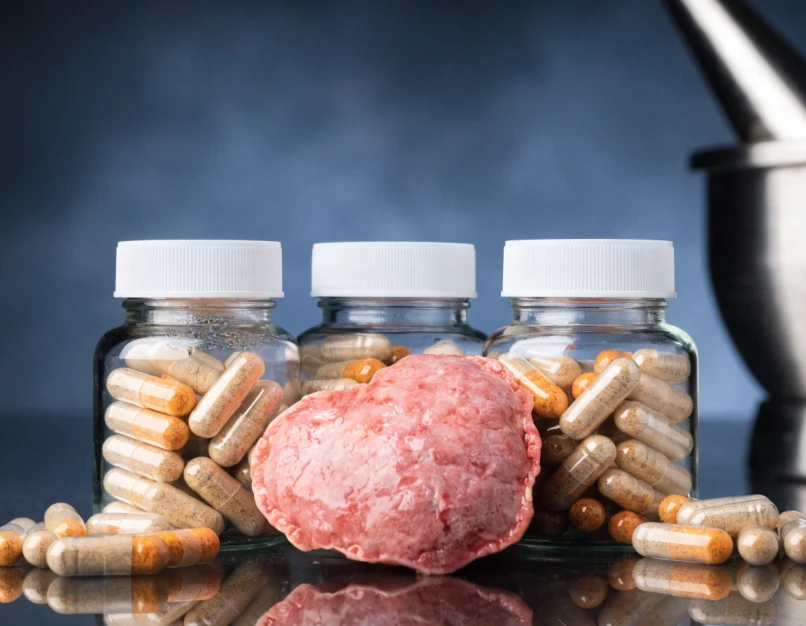
You have heard it before. Maybe a friend mentioned it. Maybe you read it in a health newsletter. Maybe your own doctor casually suggested it as something to consider.
Selenium. The tiny mineral with big promises. The antioxidant that was supposed to protect your prostate and help against prostate cancer.
And so you bought a bottle. Or you are still taking it right now, every morning, convinced you are doing something smart.
But here is what no one told you: Selenium does not play by simple rules. Depending on where your levels already sit, it may be doing the exact opposite of what you think.
The research that started the excitement
The hype did not come from nowhere. Large observational studies tracking men over the years found something genuinely striking.
Men with more selenium in their bodies were less likely to develop prostate cancer, particularly aggressive prostate cancer. Around 10% to 14% reduced the overall risk. Even clearer results when researchers looked at long-term markers, such as toenail selenium levels measured over years.
That was enough to spark serious excitement. It looked like selenium might actually protect against prostate cancer.
Then scientists asked the obvious next question.
If selenium helps, why not just take it?
So they tested it. In large randomized controlled trials, men were given selenium supplements at around 200 micrograms daily to see if it would reduce prostate cancer risk.
The result? Nothing.
No meaningful reduction in cases. No protective effect.
But it did not stop there. Some findings revealed something far more concerning.
Men taking high doses of selenium roughly above 140 micrograms per day after a prostate cancer diagnosis had a higher risk of death and disease progression.
Read that again: A supplement taken for protection, potentially making outcomes worse.
The danger zone most men never hear about
Selenium does not follow the usual more-is-better logic. It follows a U-shaped curve.
Too little is harmful. The optimal amount is beneficial. Too much becomes harmful again.
And here is the problem. The majority of men already get sufficient selenium from their diet. Add a supplement on top of that baseline, and you can easily push yourself into the excess zone without realizing it. Research suggests men with already adequate selenium levels who take supplements may face an increased risk of aggressive prostate cancer.
Food versus pills: the part that explains everything
The protective effects observed in observational studies are almost entirely linked to dietary selenium, not to selenium supplements.
Fish, eggs, whole grains, and Brazil nuts provide selenium in balanced amounts alongside other nutrients that influence how it behaves inside your body. And study after study shows the same result. Higher dietary selenium is linked to lower prostate cancer risk. But supplementation does not replicate that benefit.
The pill is not the same as the food.
What this means if you have already been diagnosed
If you are on active surveillance, you might think a supplement could help keep your PSA stable or slow things down. The evidence says otherwise.
Selenium supplements do not improve survival. They do not slow cancer progression. They do not consistently reduce PSA levels. And high-dose supplementation after diagnosis may actually worsen outcomes.
The bigger question
If the supplement doesn’t work the way we thought it would, what does?
What food choices actually move your selenium status into the protective range without tipping into excess? What does your current diet look like in terms of baseline intake? And if selenium from food shows a protective signal, what else in that food pattern is quietly doing the work alongside it?
That is the part most men never get taught. And even when they do, most find it hard to apply without understanding their full picture: labs, diet, and individual risk.
If you want a nutrition strategy built around your PSA pattern and your actual food intake rather than generic supplement advice, that is exactly what I do inside my coaching.
Subscribe to my newsletter for free evidence-based prostate cancer insights that can make a real difference to your health, and join my Prostate Cancer Health Coaching Group for consistent support, structure, and a community that keeps you motivated.
Want a plan built around your exact situation? My 1-on-1 coaching covers your treatment history, side effects, labs, schedule, injuries, energy, and food preferences. You get a tailored strategy, ongoing adjustments, and direct accountability. This is your opportunity to invest in yourself, your health, and your future.
Other articles you may find interesting
How prostate cancer rewires itself when testosterone is cut off
A hidden metabolic switch may change how castrate-resistant prostate cancer survives hormone therapy through diet.
What Happens to Prostate Cancer When Tomato Is Added to a Western Diet?
The same food was tested under two dietary conditions. What happened challenges the way we think about “anticancer” foods.
The pill that’s cutting prostate cancer deaths by 41%
New research suggests a widely used medication may reduce the risk of prostate cancer coming back after surgery, especially in aggressive disease.
How you brew coffee changes its prostate cancer benefits
Coffee can lower the risk of prostate cancer progression, but how you brew it matters a lot.
References
Kristal AR, Darke AK, Morris JS, Tangen CM, Goodman PJ, Thompson IM, Meyskens FL Jr, Goodman GE, Minasian LM, Parnes HL, Lippman SM, Klein EA. Baseline selenium status and effects of selenium and vitamin e supplementation on prostate cancer risk. J Natl Cancer Inst. 2014 Mar;106(3):djt456.
Kenfield SA, Van Blarigan EL, DuPre N, Stampfer MJ, L Giovannucci E, Chan JM. Selenium supplementation and prostate cancer mortality. J Natl Cancer Inst. 2014 Dec 12;107(1):360.
Stratton MS, Algotar AM, Ranger-Moore J, Stratton SP, Slate EH, Hsu CH, Thompson PA, Clark LC, Ahmann FR. Oral selenium supplementation has no effect on prostate-specific antigen velocity in men undergoing active surveillance for localized prostate cancer. Cancer Prev Res (Phila). 2010 Aug;3(8):1035-43.